“Getting the right people in the right jobs is a lot more important than developing a strategy.”
-Jack Welch
The Crucial Hiring Questions
The hiring process is the crucial part that ensures the smooth and successful operation of an organization in the long run. Though in a digitally savvy world where finding a pool of talent is easy, screening the wide prospects to narrow down to the right candidate takes time and effort.
With digital tools and resources, such processes are simplified, allowing rigorous scrutiny through online calls, interviews, and testing before a final in-person meeting is made to finalize the deal.
These communications before the appointment help organizations and managers understand the potential, attitude, and suitability of the candidate in working with the organization and its culture, and even streamline tasks such as salary negotiations and HR processing with the help of a sales commission calculator.
Ideally, in a job interview, each question serves a purpose. Most questions are directed at understanding the person and their background, their motivation and aspirations, teamwork and networks, knowledge and experiences, problem-solving skills and attitude, and many more.
After an interview, the hiring team will have a general idea about the personal and professional disposition of the candidate. Here is a step by step process to finding that right talent for your organization.
Table of Contents:
The Interview Format
Best Interview Questions For Sales Reps
Tips To Unlock Your Sales Rep’s Full Potential
The Interview Format
A job interview in all industries, including manufacturing, retail, life sciences, finance and many more, follows a particular format and sequence that cross-checks, verifies, scrutinizes, and ensures the authenticity and suitability of the candidate for the role.
An interview usually begins with a self-introduction. Along with testing their communication and language skills, it is a verification process that cross-checks whether what they have mentioned in their CV is right or made up.
The next is about their professional experience and knowledge of the industry. These questions help the hiring team understand the things a fresh candidate knows to smoothly transition into the new work environment and pick up the work at hand. For an experienced candidate, it is a testing of their caliber and to understand what specific responsibilities they fulfilled in their previous work and the achievements they made.
In particular, the sales representative, and the hiring team will assess their range of connections and networks. In their area of work, these are essential requirements that will help them create results soon upon joining and that can be used for the company’s sake.
A repeated question during any job interview is the goal of the candidate for the next two to three years. These questions help companies assess the goal-setting and growth prospects of the candidate. Only a candidate who has aims set for the upcoming years and planned personal growth will strive for the growth of the company as well. Such candidates will not get stuck in the security of their current position and work to grow for success and betterment.
Only after assessing all these prospects of the candidate and finalizing their technical know-how and caliber will the hiring team move to the final process of HR and salary negotiation, after which the appointment letter is offered.
By traversing through all these steps and processes, the hiring team understands the motivation of the candidate to work with the company, their personality, and attitude towards work, technical knowledge and experience as well as their problem-solving capacity and teamwork to rise to the requirements of the organization and role.
Best Interview Questions For Sales Reps.
Here are a few effective and best sales interview questions that organizations can ask while hiring a sales representative for your company.
Best Interview Questions For Sales Reps
Entry-level sales hire:
Why do you think sales and marketing are your domain?
What qualities do you think you have that make you suitable for this role?
How comfortable are you with communicating with others?
Tell me about a rejection or failure you faced recently and how did you handle it?
How good are you at creating rapport with people and networking?
Please describe your decision-making approach when you’re faced with difficult situations.
Why are you interested in our company?
What do you know about our competitors?
How do you plan to improve yourself when taken in for the job?
What are the skills you think are required to be a sales rep?
Experienced sales hire:
What was your biggest sales achievement that you are most proud of?
What were some of your mistakes at your previous job?
How do you create a winning environment? Please share examples of strategies you use to motivate your team
Do you have a strategy for a cold call and how do you create a rapport with customers?
Can you pitch our company to me?
How many deals were you able to close, give demos in the last 6 months
When do you decide to stop following up on a potential customer?
What are your weaknesses?
Tell me a lesson you learned from your previous work.
What part of being a sales rep do you enjoy the most?
Tips To Unlock Your Sales Reps’ Full Potential
After hiring a smart sales representative, organizations cannot sit back and expect them to traverse the path. You must ensure regular and consistent input and create a learning ambiance where sales reps can grow and become valuable assets to the organization. These include:
Tips To Unlock Your Sales Reps’ Full Potential
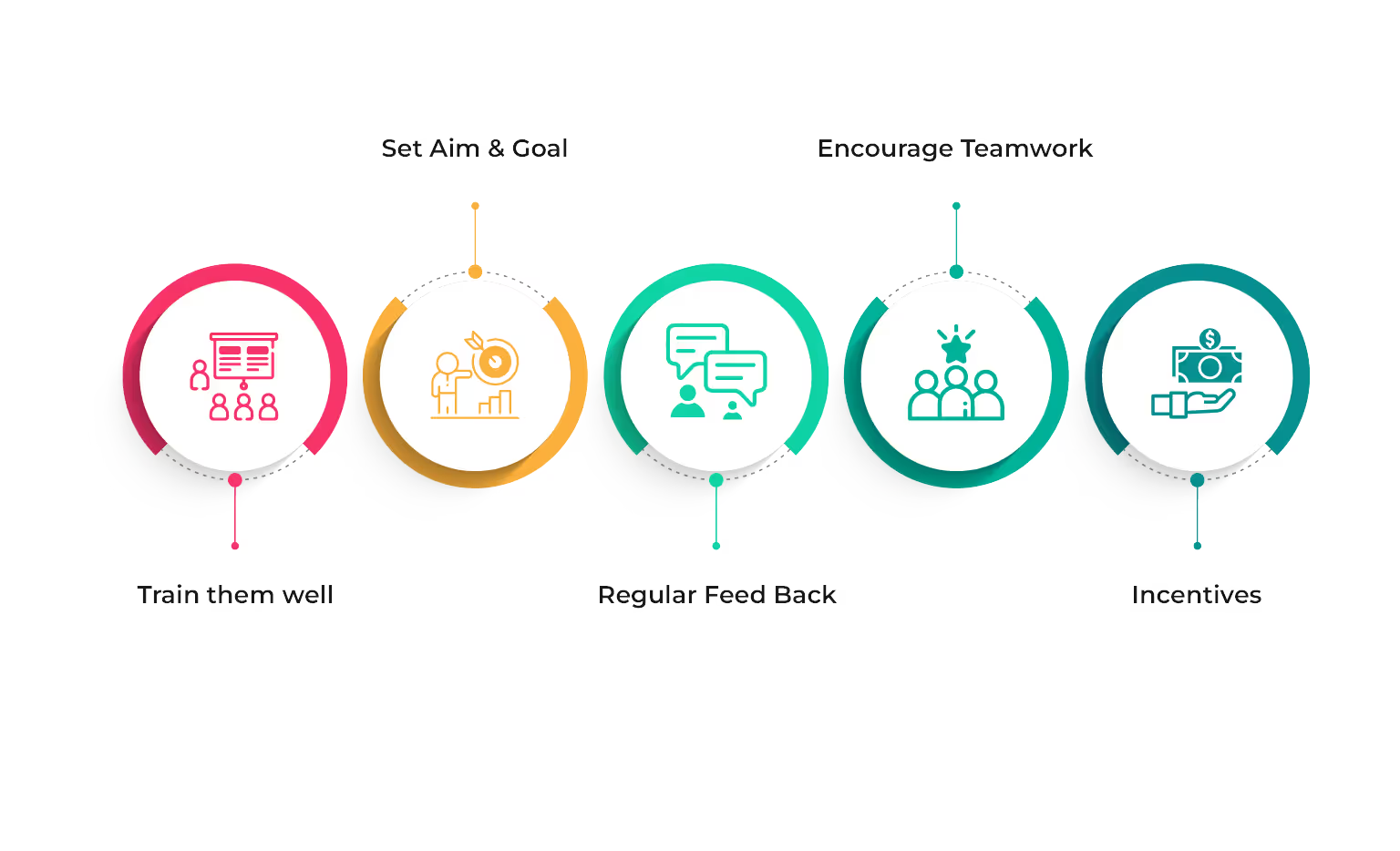
Train Them Well: Sales reps must be given regular training where they get the opportunity to learn the latest tactics and strategies to become competent in their field and upskill to stay relevant in the competition.
Set Aims and Goals: Assigning targets and goals will help sales reps stay focused on their game and stay on their toes. It will also create an ambiance where they are striving to grow and become better in their roles.
Regular Feedback: Feedback is a crucial part of ensuring the competitiveness of sales reps. Being appreciated for the work they do helps them feel validated and consider their contributions as significant to the growth and success of the organization.
Encourage Teamwork: An organization cannot work smoothly without good teamwork. Organizations must create a work culture where sales representatives are encouraged to collaborate wherein they learn from each other and work towards a common cause.
Incentives: The best way to ensure sales rep competitiveness and commitment is through incentives. Keeping a transparent and clear sheet of their turning a qualified lead into a loyal customer and paying them their rightful incentive will help keep them motivated.
Maintaining track of the sales representative’s lead generation through spreadsheets can be confusing and prone to errors. Hence, to ensure the motivation of sales reps and the integrity of the organization, it is essential to efficiently maintain such a track record with trust and transparency.




%20(1).avif)