Incentive automation lets pharma finance close payouts in 5 days
November 24, 2026
Pulkit Agarwal
Pulkit Agarwal
Key Insights
Even after careful development, spreadsheets carry errors in 1% or more of formula cells (Panko, University of Hawaii, 2008).
In this blog:
Why pharma incentive payout close drags on for weeks
What a 5-day payout close looks like
How every incentive payout stays traceable for audit
What finance teams get from Kennect
I have sat with many pharma finance teams during payout week. The pattern rarely changes. Sales ops sends a workbook late. Finance finds numbers that don't tie back. Someone rebuilds a formula at midnight. Reps wait, and trust drops a little each month. None of this comes from careless people. It comes from a process built on files passed between inboxes. When the calculation lives in one system, finance stops chasing and starts checking. The close gets shorter because the rework disappears.
Ask your sales ops lead this week: how many days did last month's payout take, and where did they go?
Table Of Content
Why pharma incentive payout close drags on for weeks
Pharma incentive plans have many moving parts. One medical representative can earn on primary sales, secondary sales and doctor coverage. Call compliance, launch brands and team gates add more. Each input comes from a different system.
Sales ops pulls data from the ERP and stockist secondary reports. It adds CRM call data and manual adjustments. Then it builds everything in spreadsheets. Finance receives the final file near month end.
That is where the delays begin. Finance cannot see how a number was built. Questions go back over email. Sales ops reworks the file. A new version goes out. The loop repeats two or three times.
Four problems keep the close open:
Late stockist data. Secondary sales arrive days after month end, and some stockists report late.
Data that doesn't reconcile. Sales in the payout file rarely match the ERP on the first pass.
Hidden logic. Formulas sit in cells that one person understands.
Late disputes. Reps raise queries after payout, so finance reopens closed months.
Small slips add up across these handoffs. Panko reviewed the spreadsheet error studies. Errors sat in 1% or more of formula cells. A payout file with 5,000 formula cells would carry 50 or more.
Source: Raymond R. Panko, "What We Know About Spreadsheet Errors," University of Hawaii, revised 2008
The payout cycle stretches well into the next month. Reps lose trust in the numbers. Finance loses time it needs for the books. See where manual handoffs create payout errors.
The delay comes from a process built on files.
What a 5-day payout close looks like
Automation moves the work earlier. Data flows in daily through the month. Rules run in one system. Finance reviews results and stops rebuilding files.
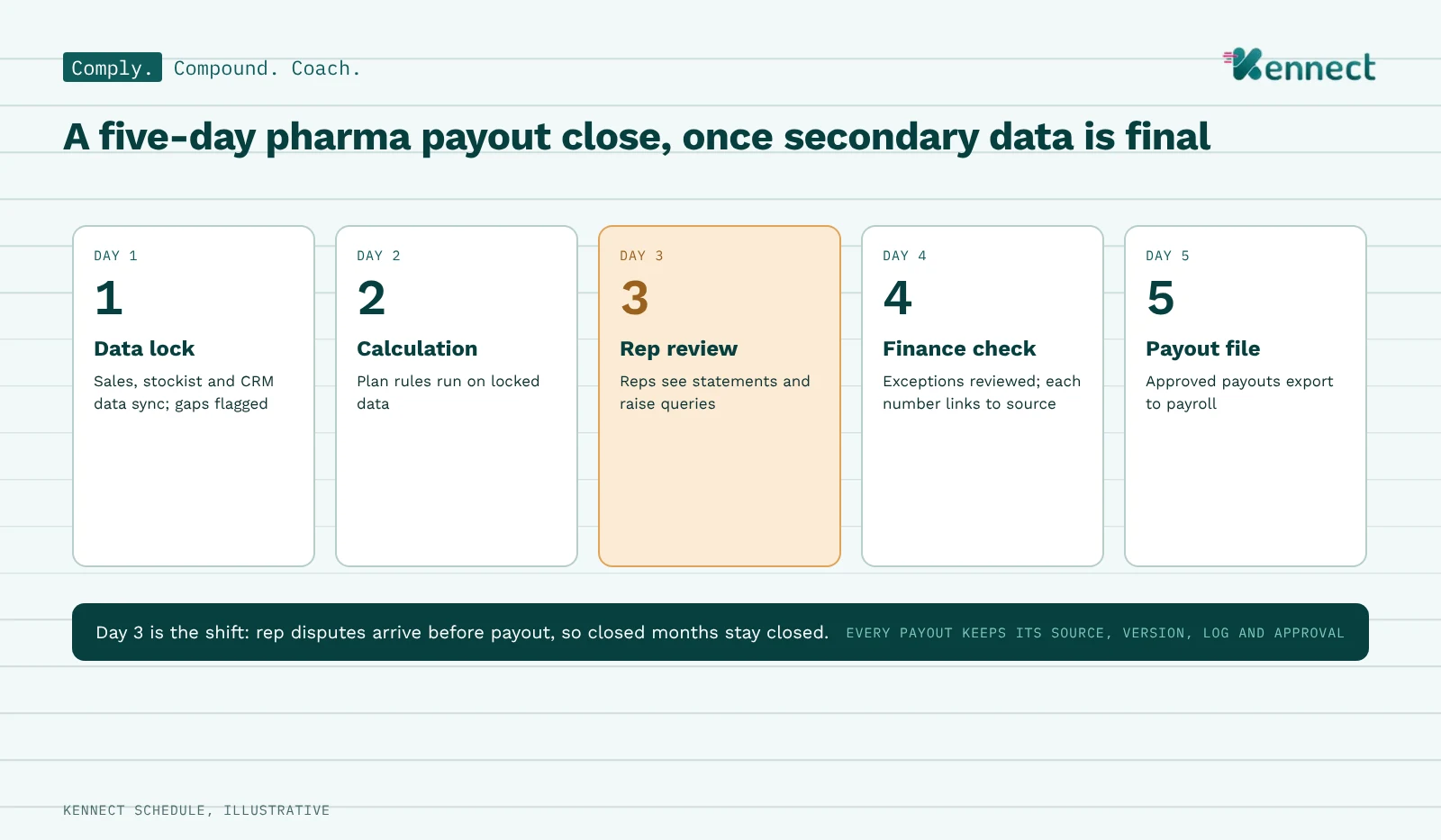
The five days start when the month's secondary data is final. Here is how they run on Kennect:
Day 1: Data lock. Sales, stockist and CRM data sync through API. Kennect flags gaps and mismatches before anyone calculates.
Day 2: Calculation. Plan rules run on locked data. Every rep's payout is ready within hours.
Day 3: Rep review. Reps see their own statement. They raise queries inside the platform, with the data attached.
Day 4: Finance check. Finance reviews exceptions and approves. Each number links back to its source row.
Day 5: Payout file. Approved payouts export to payroll. The month closes with a full record.
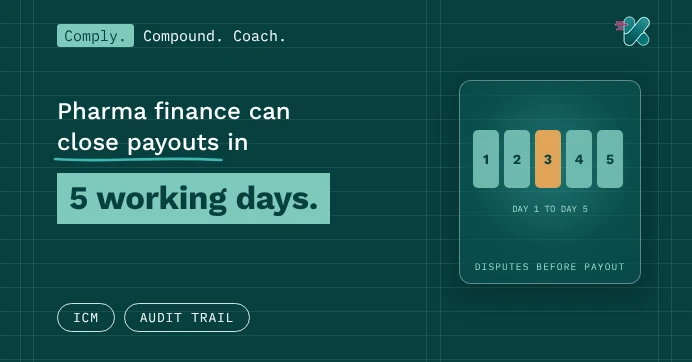
The big shift is on Day 3. Disputes arrive before payout. Finance stops reopening last month's numbers.
Where the days go
Spreadsheet close
Five-day close
Waiting for and cleaning data
6 to 8 days
Day 1, with gaps flagged daily
Building and checking formulas
5 to 7 days
Day 2, rules already configured
Rework after finance questions
4 to 6 days
Answered from the source row
Rep disputes
After payout, reopening the month
Day 3, before payout
Approvals
Email, one head at a time
Day 4, logged in the platform
Illustrative ranges, not client data.
Finance time shifts as well. Less time goes on chasing files. More goes on accruals, forecasts and cost of sales.
When the data is clean on Day 1, finance can close on Day 5.
How every incentive payout stays traceable for audit
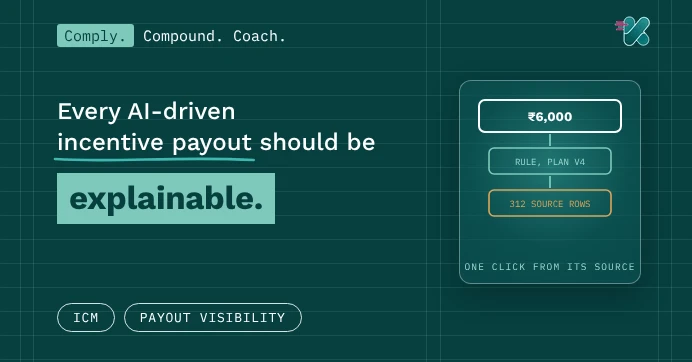
Auditors ask one question again and again. How did you get this number? In a spreadsheet, the honest answer is often unclear. In Kennect, the answer is one click away.
Every payout in Kennect carries its full trail:
Source data. Each figure links to the exact record it came from.
Plan version. The record shows which rule set applied and when it changed.
Change log. Every edit shows who made it, when and why.
Approvals. Each sign-off is time-stamped against the approver's name.
Rep queries. Disputes and their outcomes stay on record.
This matters for statutory audits and internal financial controls testing. It also matters for global pharma companies. Group finance often needs proof that local payouts follow policy. Kennect gives them that proof without a separate exercise.
Plan governance matters more since UCPMP 2024. The code bars gifts and personal benefits to healthcare professionals. The CEO self-declares compliance. Approved plan versions show leadership what the field was paid to do.
Source: Department of Pharmaceuticals, Uniform Code for Pharmaceutical Marketing Practices 2024, notified 12 March 2024
Traceable also means repeatable. Run last quarter's plan on last quarter's data. The result matches every time.
If finance can trace every payout, audits stop being a fire drill.
What finance teams get from Kennect
Kennect is an AI-led sales performance and incentive compensation management platform. One rule engine runs every variable payout, from rep incentives to stockist schemes. Teams at AstraZeneca, GSK, Sanofi and Boehringer Ingelheim run incentives on it. Here is what finance gets day to day:
Comply: one source of truth. Sales, stockist and CRM data sit in one place. The calculation engine connects to source systems through their APIs.
Comply: exception-based review. Finance sees the payouts that break a rule. The rest are approved in bulk.
Comply: payroll-ready exports. Approved payouts go out in the payroll format already in use.
Compound: no-code plan setup. Sales ops builds and changes plans without IT tickets.
Compound: accrual visibility. Incentive cost is tracked through the month, ahead of the close.
Coach: rep statements. Reps raise questions through query management, with the data attached.
KAI in practice. A rep asks why the payout changed. KAI Exceptions explains it from the data, so fewer tickets reach finance. Sales ops describes a plan in plain words. KAI Simulations builds the first version for review. A sales head asks which division underperformed. KAI Insights shows the drivers behind the numbers.
Kennect gives finance control of payouts without the manual work.
Reps should not wait weeks to get paid.
See a pharma payout close in five days, traced to source.
Move data checks and calculation to the start of the cycle. With sales, stockist and CRM data syncing daily, finance reviews results. Rep queries raised before payout stop closed months from reopening. With clean data, the close can run in about five working days. The clock starts once secondary data is final.
An auditable report lets anyone trace each payout back to its source. That needs linked source records and the plan version applied. It also needs a log of every edit and time-stamped approvals. An auditor should be able to rerun a past month and get the same result.
Spreadsheets hide logic in cells and depend on manual copying between files. Pharma plans pull from the ERP, stockist reports and CRM. Each manual step adds a chance of error. Panko found errors in 1% or more of formula cells.
Finance should check exceptions and approve the rest. Look at payouts above set limits, manual adjustments and reps with open disputes. Confirm the plan version matches the approved policy for that period. Then confirm totals tie back to booked sales in the ERP.
Yes, incentive platforms connect through APIs to ERP, CRM and HR systems. Data then flows in without manual uploads. Ask each vendor which systems it has connected for pharma clients. Ask how it handles stockist reports.