Unlock 2024 Sales Comp Secrets: Our "Ultimate Guide to Sales Compensation" is here!Unlock 2026 Sales Comp Secrets: Our "Ultimate Guide to Sales Compensation" is here!Download Guide

Blog
B2B SaaS Incentive Compensation: Scaling Expansion, Renewals & Usage Pricing
March 20, 2026


Key Insights


B2B SaaS Incentive Compensation: Scaling Expansion, Renewals & Usage Pricing
Incentive compensation in B2B SaaS is evolving to align with the industry's shift to recurring revenue, usage-based pricing, and long-term customer value. Traditional models that reward one-time sales are no longer effective in driving renewals, expansions, or sustained growth. Key takeaways:
- Traditional pitfalls: Paying full commissions upfront often leads to financial strain if customers churn early. Only 21% of companies are satisfied with their current compensation plans.
- Modern models: Focus on metrics like Net Revenue Retention (NRR), usage-based thresholds, and shared accountability between sales and customer success teams.
- Usage-based pricing impact: With 77% of major software companies adopting consumption-based pricing, compensation now ties to actual product usage, creating challenges like delayed payouts and revenue lag.
- Key components: Plans now include clawbacks, tiered commissions, dual quotas, and effective Sales SPIFs to ensure alignment with long-term value and recurring revenue goals.
- Role-specific incentives: Tailored structures for Account Executives, Customer Success Managers, and Sales Engineers drive focus on acquisition, retention, and technical contributions.
To remain competitive, SaaS businesses must design compensation plans that balance immediate results with ongoing customer engagement, leveraging automation and predictive analytics for precision and scalability.
What Is B2B SaaS Incentive Compensation?
B2B SaaS incentive compensation refers to a pay structure tied to performance, specifically designed to encourage recurring revenue and sustained growth . Unlike traditional models that reward one-time deals, this approach focuses on customer retention and expanding existing accounts .
The key distinction lies in how value is assessed. Conventional systems follow a straightforward "close the deal, earn commission" model . On the other hand, B2B SaaS incentive compensation emphasises revenue quality and timing. Payments are distributed over the subscription lifecycle and are aligned with metrics like Annual Contract Value (ACV), Net New Annual Recurring Revenue (ARR), or even usage-based thresholds .
This shift has also led to role specialisation within the industry. SaaS companies often divide incentives between "Hunters", who focus on acquiring new customers, and "Farmers", who handle renewals and account expansion. This division ensures tailored attention and compensation for each phase of the customer journey.
Core Components of B2B SaaS Incentive Compensation
To sustain long-term growth, B2B SaaS incentive plans incorporate these essential elements that align with each stage of the sales process:
- Base Salary: This fixed component reflects market norms and the seniority of the role. For closing roles like Account Executives, base salaries typically make up 50–60% of the total compensation package .
- Commissions: A variable pay component directly tied to revenue metrics such as ARR or Monthly Recurring Revenue (MRR). For SaaS Account Executives, commission rates generally range from 8% to 12% of ACV, averaging 11.5% for those meeting 100% of their quota. Accelerators provide additional rewards for surpassing quota thresholds (e.g., hitting 120% attainment) to encourage top performance.
- SPIFFs (Sales Performance Incentive Funds): These short-term bonuses are designed to drive immediate results, such as promoting a new product, closing deals within a specific timeframe, or targeting new market segments .
- Clawbacks: A mechanism allowing companies to reclaim commissions if a customer churns or defaults within a set period, often 90–180 days. This ensures that sales representatives prioritise long-term customer fit and quality .
- Draws: Temporary income support for new hires during their ramp-up phase. Recoverable draws act as advances against future commissions, while non-recoverable draws guarantee income during the early months without requiring repayment .
For SaaS Account Executives, the median On-Target Earnings (OTE) - which represents the total annual pay for meeting 100% of quota - stands at approximately ₹1,58,00,000 . Well-designed incentive programmes have been shown to enhance sales performance by up to 44% .
The table below highlights how various roles align with specific pay structures and performance metrics:
The Shift to Expansion and Renewal-Driven Revenue in SaaS
Traditional vs Expansion-Focused SaaS Compensation Models Comparison
The economics of SaaS have undergone a transformation. With customer acquisition costs climbing, companies are now prioritising long-term customer fit over quick deals that often lead to high churn rates The focus has shifted from sheer volume to a model that values efficiency and sustainable growth .
This change is rooted in a fundamental truth: recurring revenue is the cornerstone of SaaS value . Boards and investors are now placing greater emphasis on net retention rather than just the size of one-off deals. Contracts that consistently renew and expand deliver significantly higher long-term returns.
"SaaS value compounds over time. Comp should reflect that." – Everstage
Net Revenue Retention (NRR) has become the key metric shaping modern B2B SaaS compensation strategies. Unlike traditional models that reward sales teams solely for signing contracts, NRR-driven plans incentivise engagement throughout the entire customer lifecycle - from the initial sale to renewals and expansions . By measuring the percentage change in recurring revenue from existing customers (factoring in both upsells and churn), NRR ensures sales teams focus on customer fit and long-term value rather than short-term wins.
Data supports this shift, showing that expansion-focused strategies convert sales efforts into sustained profitability by maximising revenue from existing accounts . However, only 21% of companies are satisfied with their current sales compensation plans, and 53% of sales reps fail to meet their quotas . This context highlights the growing need to compare traditional compensation models with those centred on expansion.
Traditional vs. Expansion-Focused Compensation Models
The move toward prioritising recurring revenue reshapes not just metrics but also the daily operations of sales teams. Traditional compensation models reward "hunters" for closing new deals, often using Annual Contract Value (ACV) as the primary measure of success . In contrast, modern SaaS compensation plans focus on the entire customer journey, rewarding teams for lifetime engagement rather than just the initial deal. Expansion-focused models promote shared accountability among Account Executives, Customer Success Managers, and Account Managers .
Compensation rates also reflect these differing priorities. Traditional models typically offer 8–15% commission on new business ACV . Expansion-focused models adopt tiered structures, offering 2–5% for renewals and 8–10% for expansion ACV, with Customer Success Managers earning 4–6% for expansion revenue . This tiered approach ensures a balanced focus on retention and quality expansion efforts.
How Usage-Based Pricing Changes Incentive Compensation
The rise of expansion and renewals has transformed incentive compensation models, and usage-based pricing (UBP) takes this evolution a step further. Unlike traditional models that focus on upfront commitments, UBP connects compensation directly to actual product usage rather than the projected value of a first-year subscription .
This shift redefines when commissions are triggered. Instead of paying out at contract signing, usage-based models tie payouts to real usage metrics. Today, 77% of the largest software companies rely on consumption-based pricing. However, many struggle to ensure fair compensation for their teams. In traditional setups, commissions are earned immediately upon signing a contract. With UBP, payouts depend on actual metered usage, measured in rupees or billed invoices. This delay in revenue can discourage sales teams, as earnings hinge on future consumption.
Addressing Timing Challenges in Compensation
To handle these timing mismatches, companies have adapted their quota systems. A common solution is the dual quota system, which incentivises both initial bookings (land) and subsequent usage growth (expand). Some organisations pay 60% to 80% of the estimated annual usage upfront when the deal closes, with the balance paid after a year based on actual consumption. This approach ensures that sales representatives maintain steady earnings while aligning their incentives with customer success.
"Removing the size of the committed contract from the comp plan... helps more naturally build a deeper level of trust and alignment with the customer by measuring and paying the salesperson on value realised."
To measure usage growth effectively, companies now rely on Consumption Run Rate (CRR). This metric acts like a "speedometer", reflecting the pace of usage over a recent period rather than cumulative totals. For instance, a late-year expansion in October gets rewarded just as fairly as one in January. This system ensures timely recognition of sales efforts and prevents delays in compensation.
Challenges and Risks in Usage-Based Pricing
Tracking usage in real time adds complexity to compensation plans. In UBP companies, 54% of expansion efforts are shared between Sales and Customer Success teams, compared to 40% in traditional subscription businesses Clear handoff protocols, typically set for 6 to 12 months, are critical to ensure each team focuses on measurable goals . For example, companies like MongoDB use structured discovery questions to determine whether an expansion effort was "sales-led" (commissionable) or "naturally occurring" (non-commissionable) .
Despite its advantages, UBP comes with risks. During the 2022 economic slowdown, consumption-based SaaS revenue growth plummeted from 38% to 8% in just four quarters, while subscription revenue declined more gradually . Additionally, customers experiencing rapid usage growth may face "bill shock", leading them to seek cheaper alternatives - a phenomenon referred to as "churning out the top" . To combat this, companies often implement real-time usage dashboards and automated alerts at thresholds like 50%, 75%, and 90%. These tools help prevent unexpected invoices, a major driver of churn in usage-based models .
Designing B2B SaaS Incentive Compensation Plans for Expansion, Renewals and Usage
Creating effective B2B SaaS incentive compensation plans requires a careful balance between driving expansion, securing renewals, and aligning with usage-based pricing models. These plans must address the unique challenges of increasing account value while maintaining long-term customer relationships.
Start by identifying strategic priorities. Leadership needs to decide whether the focus should be on ARR (Annual Recurring Revenue) growth, acquiring new customers, or extending contract durations. This decision shapes the entire plan, influencing metrics, quotas, and payout structures. For example, using Annual Contract Value (ACV) simplifies the process and speeds up results, while Net New ARR offers a clearer picture of sustainable growth by factoring in churn and downsells. In usage-based models, tying incentives to actual customer usage ensures alignment with the value delivered, though it can create a revenue lag that might demotivate sales teams .
Framework for Building SaaS Compensation Plans
With the shift to recurring revenue models, every element of the compensation plan should aim to drive consistent growth. A structured approach can help ensure the plan is both effective and sustainable.
Start by aligning roles with the buyer journey. Sales Development Representatives (SDRs) focus on generating leads, Account Executives handle new business and expansions, and Customer Success Managers manage retention and renewals. Clear role definitions prevent credit overlap and ensure accountability.
Next, determine the pay mix and On-Target Earnings (OTE) using market data. Quotas are typically set using a sales commission calculator or a "bottoms-up" approach: SMB Account Executives might have quotas at 4x OTE, mid-market at 5x, and enterprise reps at 6x or more.
Tiered commission structures encourage performance above quota. For instance, a plan might offer a 10% commission up to quota and increase to 15% for exceeding it. Decelerators can also be applied for underperformance to maintain standards. Multi-year incentives, such as higher commissions for longer contracts, can encourage stability and reduce churn. For example, offering 10% on one-year contracts versus 15% on three-year contracts incentivises longer commitments.
Hybrid compensation models are particularly useful in usage-based pricing, as they reduce earnings volatility. Measuring expansion based on monthly or quarterly run-rate rather than cumulative totals ensures fair credit for late-year growth.
"SaaS sales compensation isn't just about driving revenue; it's about creating alignment. Between reps and quotas. Between sales and finance. Between strategy and execution."
- Bhushan Goel, Everstage
Simulations play a critical role in fine-tuning these plans. Using specialised platforms to model different scenarios can highlight potential issues, such as overpayment when multiple reps hit high-tier accelerators. Regularly reviewing plan performance, payout ratios, and feedback from sales teams ensures the plan adapts to evolving market conditions while staying aligned with long-term goals.
Role-Specific Compensation Strategies
Once the framework is set, the next step is to tailor incentives to specific roles. This ensures each team member focuses on their core responsibilities.
Hunters (Account Executives) focus on acquiring new customers and securing multi-year contracts. Their pay mix is often 50/50, with commissions ranging from 8% to 15% of ACV.
Farmers (Account Managers) handle renewals and account expansions. Their pay mix might be 60/40 or 50/50, with renewal commissions typically between 2% and 5% - lower than rates for new business.
Customer Success Managers are rewarded for maintaining stability and driving growth, using metrics like Gross Renewal Rate (GRR) and Net Revenue Retention (NRR). Their pay mix often skews heavily towards fixed pay, such as 80/20 or 90/10, but still includes a variable component tied to retention and adoption milestones. In usage-based models, 54% of expansion responsibilities are shared between Sales and Customer Success. Clear handoff protocols are vital, with accounts often transitioning from Sales to Customer Success after 6–12 months, once consistent monthly consumption is established.
Sales Engineers, who provide technical expertise to close deals, typically work under an 80/20 pay mix. Their incentives are based on team quota attainment and technical win rates. For complex enterprise deals involving multiple contributors, clear crediting rules are essential. This prevents overpayment for minimal contributions while ensuring fair recognition for those who add value.
To ease the transition to usage-based models, many organisations introduce guardrails for high performers. These might include temporary commission floors, guaranteed draws, or two-stage payouts where part of the commission vests only after usage thresholds are met. Such measures help protect earnings during periods of change, keeping top talent motivated and engaged.
Best Practices for Scaling B2B SaaS Incentive Compensation
To achieve efficient and scalable growth in B2B SaaS incentive compensation, it’s essential to move beyond traditional spreadsheets. Organisations that succeed in scaling their compensation strategies leverage automation, real-time data, and behavioural insights. These tools ensure that incentive plans remain aligned with company objectives while fostering transparency and trust among teams.
Key Strategies for Success
Real-time visibility enhances trust and performance. Providing sales reps with instant access to their earnings through dashboards minimises errors and allows for immediate adjustments, rather than relying on month-end reports. Automated data integration ensures smooth operations and prepares teams to handle the complexities of scaling SaaS sales commissions and incentive plans effectively.
Simplicity ensures better adoption. If sales reps need a spreadsheet to figure out their commissions, the compensation plan is already too complicated. Focus on 2–4 key metrics to keep things straightforward. For instance, an Account Executive might track New ARR, while a Customer Success Manager could focus on metrics like Gross Renewal Rate (GRR) and Net Revenue Retention (NRR).
Frequent payouts sustain motivation. Monthly or quarterly payouts outperform annual cycles, especially in fast-paced sales environments. Regular payouts maintain enthusiasm and provide quicker feedback loops. Incorporating multi-tiered accelerators - such as 10% commission up to quota and 15% beyond quota - further incentivises top performers. Research shows that well-structured incentive programs can boost sales performance by up to 44%.
In addition to payout frequency, aligning incentives with product usage is crucial. Link incentives to adoption and usage in consumption-based models. With 77% of major software companies adopting consumption-based pricing, compensation plans should reflect actual product usage rather than just "paper ARR." By using real-time data to track milestones like activation and paying based on verified usage, companies can ensure their incentives drive genuine growth. During transitions, offering temporary commission floors or guaranteed draws can protect high performers from fluctuations in usage-based metrics.
Predictive modelling prevents rollout issues. Before implementing new plans, use historical data to simulate their impact across the sales organisation. This approach uncovers potential challenges, such as excessive payouts from high-tier accelerators, while ensuring profitability targets are met. It also reinforces the importance of training frontline managers to interpret analytics, enabling them to provide data-driven coaching before performance cycles end.
"Incentive plans aren't the problem. The real issue is what happens when you can't see what's actually going on underneath them. Without analytics, you're flying blind."
- Venkat Sabesan, Everstage
How Kennect Helps Scale B2B SaaS Incentive Compensation
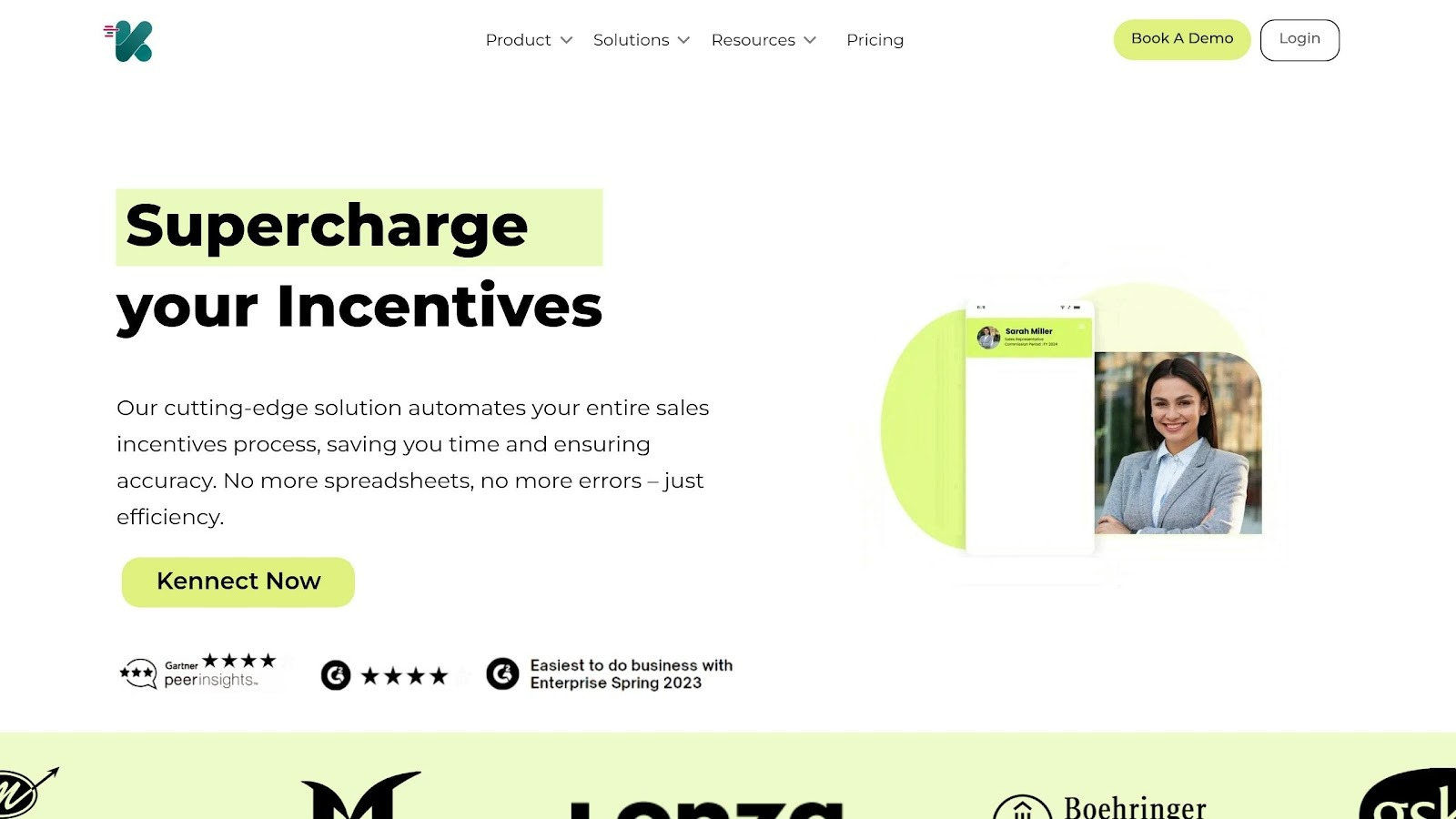
Kennect provides a tailored solution to streamline and scale B2B SaaS incentive compensation, addressing the limitations of spreadsheets and manual processes. By replacing outdated workflows with a centralised platform, Kennect automates commission tracking, eliminates delays, and offers real-time visibility across even the most intricate organisational setups. For SaaS companies navigating expansion revenue, renewals, and usage-based pricing, this means RevOps teams can focus on strategic goals rather than scrambling to finalise month-end calculations.
One standout feature is the real-time "what-if" simulations, which empower leaders to model changes, such as transitioning from Annual Contract Value (ACV)-focused plans to usage-based ones, before rolling them out. These simulations display how adjustments impact earnings, quota achievement, and overall sales costs across roles and regions. This is especially useful when shifting to consumption-based models, as it allows companies to test compensation plans against different usage patterns, churn rates, and pricing scenarios. Additionally, Kennect simplifies the complexities of managing organisational hierarchies.
Handling hierarchies and matrixed accounts is effortless with Kennect. SaaS compensation often involves global teams, multiple currencies, and varied roles - like Account Executives (AEs), Customer Success Managers (CSMs), Sales Engineers (SEs), and partners - who all contribute to a single deal. The platform efficiently manages employee transfers, resignations, and new hires mid-campaign. It supports hierarchy structures specific to different business units and seamlessly handles multi-role assignments, ensuring accurate crediting for every contributor.
Kennect also leverages predictive analytics to model usage trends and forecast compensation costs before implementing new plans. RevOps teams can simulate various structures to evaluate their impact on earnings, quota achievement, and sales costs. This capability ensures that incentives align with product adoption milestones and verified usage data, allowing for adjustments based on real-time performance insights.
The platform integrates directly with CRM and ERP systems, ensuring real-time data syncing and eliminating the risk of manual errors. Payees can access transparent dashboards showing campaign rules, detailed earnings breakdowns, and transaction-level data. Managers gain clear insights into their teams’ performance and payouts, while administrators benefit from dashboards that provide business unit-level and scheme-level analytics. By bridging CRM and ERP systems, Kennect ensures that sales efforts align with evolving pricing strategies, supporting growth through expansion, renewals, and usage-based models. With its automated workflows, the platform transforms incentive processes into a strategic, scalable, and precise operation.
Conclusion
The shift towards expansion, renewals, and usage-based pricing has reshaped the way B2B SaaS companies approach incentive compensation. Traditional models that focus solely on the initial "land" phase no longer align with the modern revenue generation and retention strategies of SaaS businesses. With consumption-based pricing becoming the norm among major software companies, compensation plans must now reflect long-term value realisation rather than just upfront bookings. This shift calls for a complete rethinking of how incentives are structured.
The stakes are high. Ineffective compensation plans can push sellers to cling to outdated models, fearing the risks of change. Such plans can also lead to talent attrition when earnings become inconsistent, or encourage behaviours like overpromising, which often result in early customer churn. Persistent issues such as low satisfaction levels and frequent quota misses highlight a deeper misalignment between strategy and execution.
Modern B2B SaaS compensation systems need to incorporate cross-functional attribution, establish transparent crediting rules, and leverage predictive modelling to anticipate plan outcomes. Automation is critical to eliminate manual errors and provide real-time visibility into earnings. These systems must strike a balance between rewarding sellers for immediate results and fostering long-term customer success. Account Executives, Customer Success Managers, and product specialists all need to be incentivised to prioritise adoption, expansion, and retention. Shifting to plans that reward recurring revenue and ongoing customer engagement is no longer just an operational adjustment - it’s a necessity for growth.
As these evolving dynamics expose the limitations of legacy systems, upgrading becomes unavoidable. Platforms like Kennect simplify this transformation by aligning incentive strategies with SaaS revenue models. If your organisation is still relying on outdated spreadsheets and manual workflows to manage incentives, it’s time to make the switch. By automating complex processes, aligning compensation with business goals, and offering teams the transparency they need to succeed, you can transform incentive compensation from a burdensome task into a powerful driver of growth.
FAQs
How do I shift from ACV-based commissions to NRR-based incentives?
To shift from ACV-based commissions to incentives centred on Net Revenue Retention (NRR), it's crucial to align compensation plans with metrics that reflect customer retention and account growth. Structure rewards to encourage renewals, upselling, and cross-selling efforts that contribute to NRR improvement. Modify variable pay structures so they are directly tied to retention rates and increased product usage. Ensure these changes are clearly communicated to the team, leaving no room for ambiguity. Continuously track the outcomes and fine-tune the plan to support steady growth and maximise long-term customer value.
What’s the best way to pay commissions in usage-based pricing without demotivating reps?
Aligning incentives with long-term customer value and usage growth creates a more balanced and sustainable approach. Instead of focusing solely on the size of the initial deal, consider offering a combination of upfront commissions for new acquisitions along with additional rewards tied to customer retention, account expansion, and increased product usage. Make it clear to your sales team that success is defined by sustainable customer growth. This encourages them to prioritise building meaningful, long-term relationships with clients rather than chasing short-term wins.
How should renewals and expansions be credited between Sales and Customer Success?
In the B2B SaaS world, renewals are generally attributed to the Customer Success team since they handle ongoing customer relationships and retention efforts. When it comes to expansions, the responsibility is often split between Sales and Customer Success, depending on the incentive framework in place. Sales teams typically earn commissions for upselling or cross-selling, while Customer Success teams may receive rewards tied to driving customer growth and maintaining retention. Clearly defining these roles is essential to align everyone with key objectives like ARR growth and enhancing customer satisfaction.

ReKennect : Stay ahead of the curve!
Subscribe to our bi-weekly newsletter packed with latest trends and insights on incentives.
Thank you! Your submission has been received!
Oops! Something went wrong while submitting the form.
Your data is in safe hands. Check out our Privacy policy for more info


Address
Kennect
224 W 35th St 500 820
New York , NY 10001
(415) 799-4494
224 W 35th St 500 820
New York , NY 10001
(415) 799-4494
Contact
Phone : (415) 799-4494
Email : info@kennect.io
Social


Achivement

© 2024 Kennect - All Rights Reserved.
Privacy Policy